Description
OVERVIEWProduct overview
MOTS-c is a short peptide encoded within mitochondrial DNA, one of a small group of mitochondrial-derived peptides identified as signalling molecules rather than structural proteins.
Research examines its relationship with AMPK activation, insulin sensitivity and exercise-associated metabolic adaptation in cell and rodent models.
All published work is preclinical or investigational. This material is supplied as a laboratory reference compound and is not authorised as a medicine in Ireland, the UK or the EU.
SUPPLY IN IRELANDMOTS-c Ireland — supplied to research laboratories
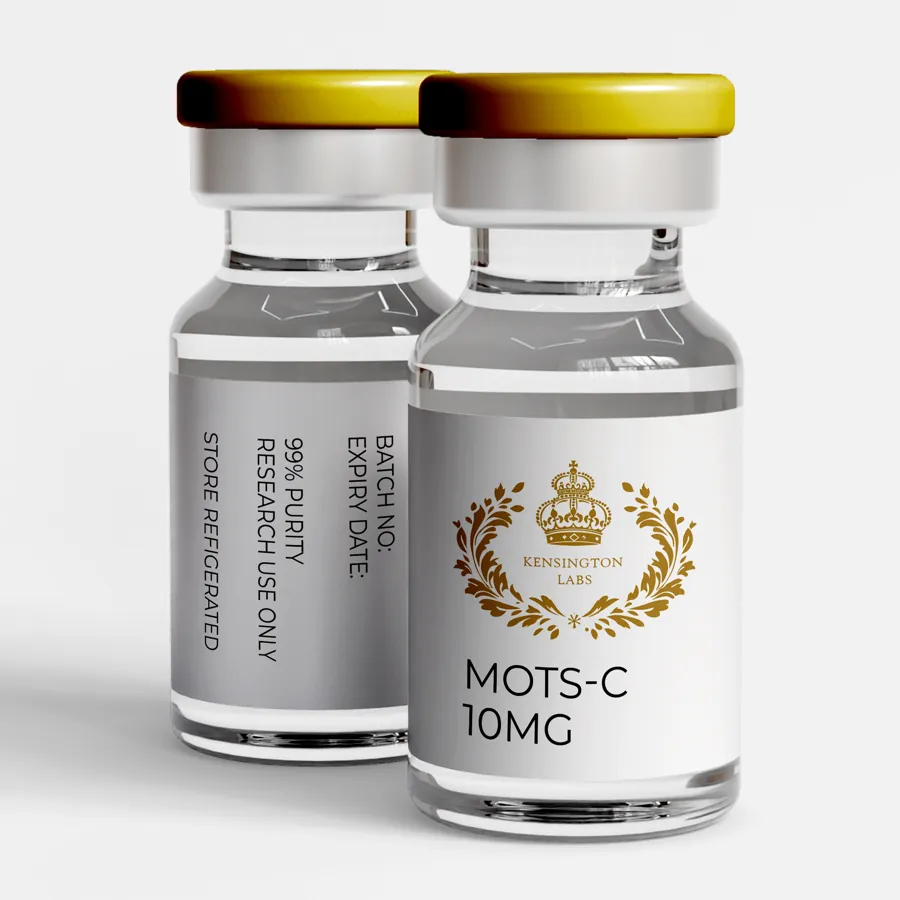
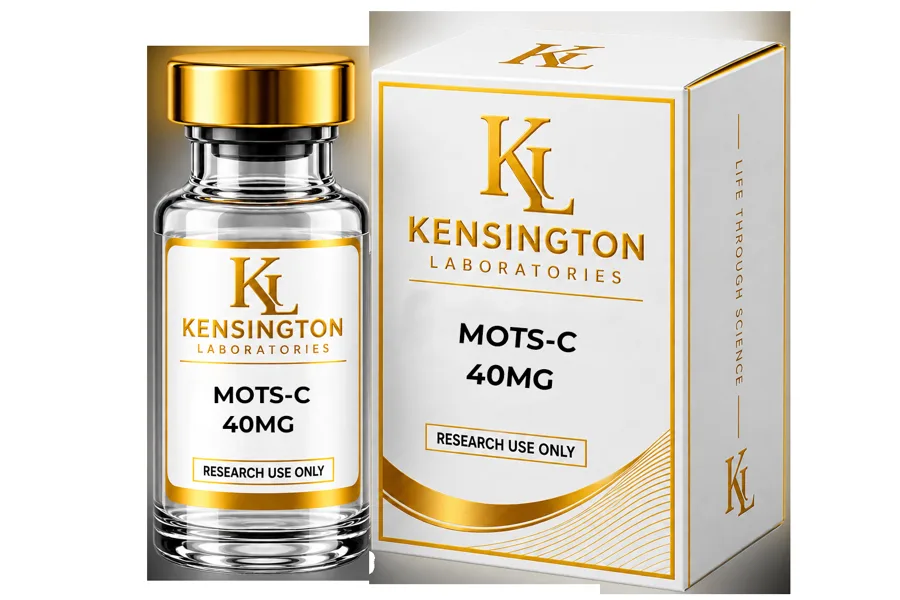
Research groups across Ireland buy MOTS-c from Kensington Laboratories as a lyophilised MOTS-c peptide, released only against a batch-matched certificate of analysis. Every vial of high purity MOTS-c is verified by HPLC and LC-MS before it leaves the facility, so laboratories ordering MOTS-c in Ireland receive material with documented purity and identity.
Laboratory MOTS-c is packed for controlled storage and sent by tracked delivery in 3–5 days to Dublin, Cork, Galway, Limerick and the rest of Ireland. Delivery costs €9.90 per order. Teams planning MOTSc research can review the specifications, certificate of analysis and reference list on this page before ordering.
Institutions searching for MOTS-c peptide suppliers in Ireland typically compare purity, batch documentation and delivery times. Each of those is published here: a 99% HPLC purity specification, a certificate matched to the batch code on your vial, and tracked delivery in 3–5 days.
MOTS-c is supplied strictly for laboratory research use only. It is not a medicine and is not for human or veterinary consumption.
SPECIFICATIONSProduct specifications
- Purity: ≥ 99% (HPLC)
- Appearance: White lyophilised powder
- Quantity: 10 mg or 40 mg per vial
- Peptide class: Mitochondrial-derived 16-amino-acid regulatory peptide
- Also known as: Mitochondrial ORF of the twelve S rRNA type-c
- Solubility: Soluble in bacteriostatic or sterile water
- Storage temperature: Store at 2–8°C; long-term −20°C, protected from light
- Shelf life: 24 months lyophilised; 30 days reconstituted at 2–8°C
- Manufacturing standard: ISO 9001 facility, GMP-aligned solid-phase synthesis
- Batch information: Batch number and expiry printed on every vial label
RESEARCHResearch overview
The following summary is provided for educational and scientific context only. It describes what has been observed in published laboratory and animal studies and does not represent established clinical outcomes, medical advice or a claim of efficacy in humans.
Background
MOTS-c is a short peptide encoded within mitochondrial DNA, one of a small group of mitochondrial-derived peptides identified as signalling molecules rather than structural proteins.
Research examines its relationship with AMPK activation, insulin sensitivity and exercise-associated metabolic adaptation in cell and rodent models.
All published work is preclinical or investigational. This material is supplied as a laboratory reference compound and is not authorised as a medicine in Ireland, the UK or the EU.
Current research areas
Published investigation clusters around a small number of biological themes. Each remains experimental and none has been established as a therapeutic effect in humans.
- AMPK pathway activation in muscle cell culture
- Insulin sensitivity in diet-induced obesity models
- Folate–methionine cycle and metabolic flux studies
- Mitochondrial stress response and ageing models
Scientific context and proposed mechanisms
Authors describe MOTS-c translocating to the nucleus under metabolic stress and influencing the folate cycle, with downstream AMPK activation proposed as the principal route to the metabolic endpoints reported.
Interpreting the evidence
Most published work in this area uses cell culture or rodent models with small group sizes and short observation windows. Independent replication varies considerably between compounds, and results are sensitive to species, route, dose and endpoint.
There is no regulatory-approved human protocol for this compound. Any laboratory protocol should be defined by the model under study, institutional ethical approval, appropriate controls and predefined endpoints.
References
CERTIFICATE OF ANALYSISIndependent batch testing
Every released batch is independently tested. Match the batch number on the vial to the certificate published online.
- Batch number
- KL-MOTSC-2409A
- Testing laboratory
- Janoshik Analytical, s.r.o.
- Date tested
- 12 August 2026
- Reported purity
- 99.85%
- Method
- RP-HPLC with UV detection at 214 nm, confirmed by LC-MS