
Products
Compounds in this collection
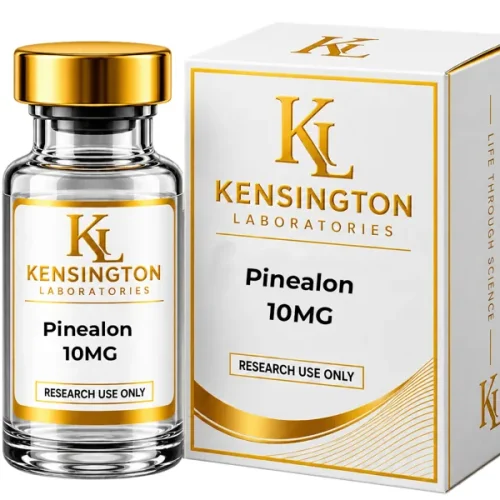 Pinealon Research Peptide
Also studied in this area
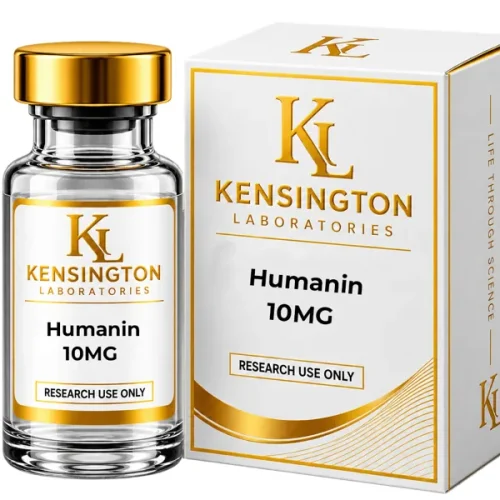 Humanin Research Peptide
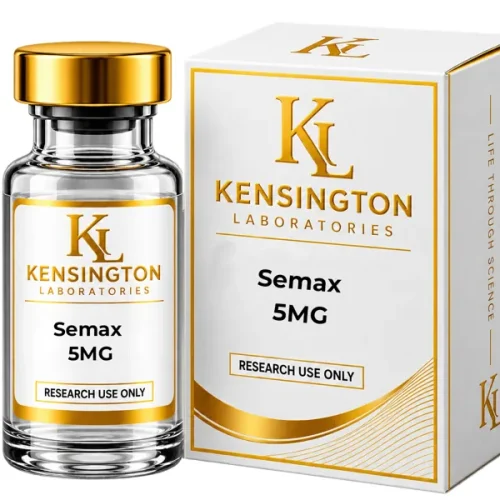 Semax Research Peptide
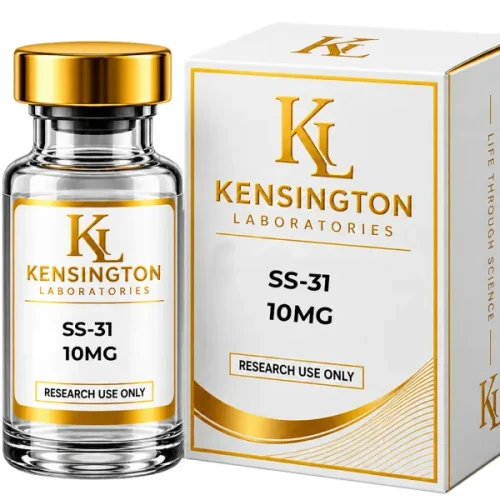 SS-31 Research Peptide
Keep exploring
Related collections
Research overview
Pathways and research context
Pinealon is a short bioregulator studied for reducing oxidative stress in neurons. Comparators cover mitochondrial protection (SS-31), cell survival signalling (Humanin) and neurotrophic support (Semax).
Neuroprotective research peptides Ireland: mechanisms of neuronal survival
Neuroprotective research peptides are studied for how they help neurons withstand oxidative, metabolic or ischaemic stress. Pinealon anchors this collection as a short tripeptide bioregulator proposed to reduce oxidative stress markers in neuronal tissue, while comparators such as SS-31, Humanin and Semax extend the picture to mitochondrial protection, cell-survival signalling and neurotrophic support.
Researchers assembling a neuroprotective research peptides Ireland panel often select compounds to target a specific stress pathway — oxidative, mitochondrial or ischaemic — rather than treating the collection as a single mechanistic class.
Compound relationships: Pinealon and its cross-link comparators
Pinealon belongs to the short bioregulator peptide family, believed to act at the level of chromatin and gene expression to reduce oxidative damage in neurons. SS-31 approaches neuroprotection from a different angle, binding cardiolipin on the inner mitochondrial membrane to stabilise mitochondrial function under stress.
Humanin, a mitochondrial-derived peptide, is studied for interactions with IGFBP-3 and STAT3 signalling linked to cell survival under stress, while Semax contributes a neurotrophic, BDNF-linked mechanism. Together these compounds let researchers probe neuroprotection from oxidative, mitochondrial and trophic-support angles within one comparative protocol.
Laboratory applications for neuronal stress models
Common applications include oxidative stress assays in cultured neurons, ischaemia-reperfusion models assessing cell viability after induced stress, and neuronal survival assays tracking apoptosis markers following exposure to a stressor with and without peptide pretreatment.
Because this collection relies on a single primary compound, Pinealon is frequently run alongside SS-31 or Humanin from adjacent collections in the same experiment to build a broader mechanistic comparison rather than testing Pinealon in isolation.
Study design for oxidative and ischaemic stress protocols
Timing of peptide administration relative to the stress insult is a key variable: pretreatment versus post-insult dosing can produce markedly different protective effects in the literature, so protocols should specify and justify the chosen timing relative to the study question.
Dose-response characterisation is particularly important for bioregulator peptides like Pinealon, where the literature base is comparatively narrow, and researchers should document viability assay method and timepoints clearly to allow comparison against published work.
Storage, reconstitution and batch quality for neuroprotective peptides
Pinealon and its comparator compounds are supplied lyophilised and should be stored frozen or refrigerated prior to reconstitution, with reconstituted solution kept refrigerated and used within the stated timeframe to preserve activity for sensitive cell-viability assays.
Every vial in the neuroprotective research peptides Ireland range from Kensington Labs Ireland ships with a batch-specific certificate of analysis showing HPLC purity and LC-MS verified mass, supporting consistent results across replicate oxidative-stress experiments.
Compound comparison
| Compound | Mechanism studied | Research focus |
|---|---|---|
| Pinealon | Short bioregulator peptide proposed to reduce neuronal oxidative stress | Oxidative stress and neuronal protection research |
| SS-31 | Cardiolipin-binding mitochondrial-targeted peptide | Mitochondrial membrane stability research |
| Humanin | Mitochondrial-derived peptide linked to IGFBP-3/STAT3 signalling | Cell survival under stress research |
| Semax | ACTH(4-10) analogue linked to BDNF expression | Neurotrophic support and neuroprotection research |
Research considerations
With one anchor compound, this hub relies on cross-links to related hubs for broader comparisons.
Knowledge Centre
Related articles
Questions
Frequently asked questions
What is Pinealon?
Why are mitochondrial peptides linked here?
Why is Pinealon the only primary compound in this collection?
Does timing of dosing relative to a stress insult matter?
Can Pinealon and SS-31 be studied in the same protocol?
How is Pinealon's purity confirmed before use?
Quality
Certificates of analysis
Every compound in this collection is supplied with a batch-matched certificate of analysis confirming HPLC purity and LC-MS identity.
Categories
Related categories
Ready to source neuroprotective research peptides?
HPLC-tested, lyophilised vials with batch COAs. Free tracked delivery over €50 · €9.90 under €50 (3–5 days)