
Products
Compounds in this collection
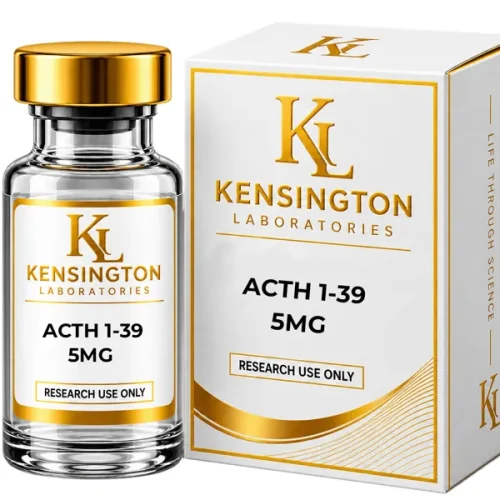 ACTH 1-39 Research Peptide
Original price was: €74.90.€59.90Current price is: €59.90.
View product →
ACTH 1-39 Research Peptide
Original price was: €74.90.€59.90Current price is: €59.90.
View product →
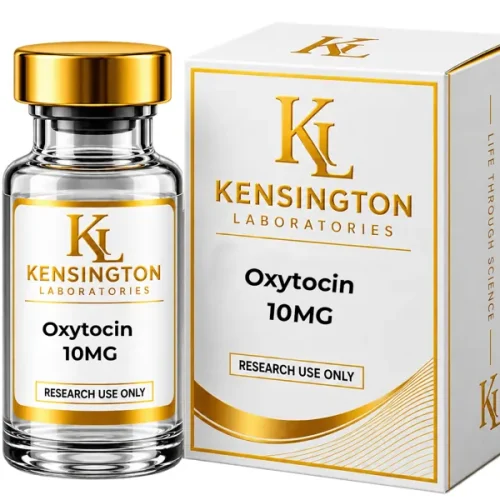 Oxytocin Research Peptide
Original price was: €49.95.€44.95Current price is: €44.95.
View product →
Oxytocin Research Peptide
Original price was: €49.95.€44.95Current price is: €44.95.
View product →
Also studied in this area
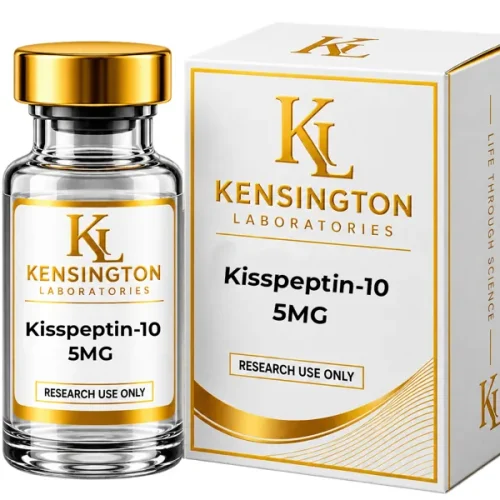 Kisspeptin-10 Research Peptide
Keep exploring
Related collections
Research overview
Pathways and research context
ACTH 1-39 drives adrenal cortisol release through MC2R. Oxytocin acts on its own receptor in the brain and periphery, linked to social behaviour and smooth muscle contraction.
HPA axis and neuroendocrine pathways in endocrine research peptides Ireland
Endocrine research peptides Ireland laboratories source most often address pituitary and hypothalamic hormone signalling outside the gonadotropin system. ACTH 1-39, the full-length adrenocorticotropic hormone, binds MC2R on adrenal cortex cells, activating cAMP signalling that drives cortisol synthesis and release, making it a core reagent in hypothalamic-pituitary-adrenal axis research.
Oxytocin acts through its own G-protein-coupled receptor expressed in the brain, uterus and other peripheral tissues, linked in the literature to social behaviour models, smooth muscle contraction assays and broader neuroendocrine signalling studies distinct from the stress axis that ACTH represents.
Compound relationships with the wider HPG and stress axes
Although ACTH and Oxytocin sit in different neuroendocrine circuits, both are frequently cross-referenced against Kisspeptin-10 research when investigators study how stress-axis or social-bonding hormones interact with reproductive axis timing, since crosstalk between HPA and HPG signalling is a recognised research question.
This makes the endocrine collection a natural companion to reproductive hormone studies: a protocol examining whether elevated ACTH-driven cortisol output suppresses Kisspeptin-10-stimulated GnRH neuron activity is a typical example of cross-axis experimental design.
Laboratory applications for ACTH and Oxytocin research
ACTH 1-39 is used in HPA axis research to characterise adrenal responsiveness, often as a stimulation test analogue in isolated adrenal cell or tissue models. Oxytocin is applied in social behaviour models in rodents and in smooth muscle contractility assays using isolated uterine or vascular tissue.
Both compounds also appear in receptor-binding and internalisation studies, where fluorescent or radiolabelled analogues help characterise MC2R and oxytocin receptor pharmacology in cell lines engineered to overexpress each target.
Study design considerations for stress-axis sensitive endpoints
HPA axis endpoints are notably sensitive to handling stress, time of day and prior experimental manipulation, so protocols using ACTH 1-39 should standardise handling procedures and collection timing tightly to avoid confounding baseline cortisol variability.
Oxytocin studies similarly require controlled administration routes and timing, since receptor desensitisation and context-dependent behavioural effects have both been reported, meaning a single dosing paradigm may not generalise across different model systems.
Handling, storage and quality assurance for endocrine supply
Both ACTH 1-39 and Oxytocin are supplied as lyophilised endocrine peptides that should be stored frozen and protected from light prior to reconstitution, then kept refrigerated in solution and used within the recommended window to limit oxidative degradation.
Endocrine research peptides Ireland suppliers should provide a certificate of analysis documenting HPLC purity and, ideally, LC-MS verified ACTH 1-39 identity for every batch, giving laboratories traceable quality records to cite when reporting HPA axis or neuroendocrine findings.
Compound comparison
| Compound | Mechanism studied | Research focus |
|---|---|---|
| ACTH 1-39 | MC2R agonist driving adrenal cAMP signalling | HPA axis and cortisol release research |
| Oxytocin | Oxytocin receptor agonist (central and peripheral) | Social behaviour and smooth muscle contraction models |
| Kisspeptin-10 | KISS1R agonist activating GnRH neurons | Cross-axis HPA/HPG interaction research |
Research considerations
Stress-axis endpoints are sensitive to handling and timing, so protocols should be tightly controlled.
Knowledge Centre
Related articles
Questions
Frequently asked questions
What is ACTH 1-39?
Why is Oxytocin in the endocrine hub?
Why is ACTH 1-39 used instead of shorter ACTH fragments?
What factors can confound Oxytocin behavioural studies?
Can ACTH and Oxytocin be studied in the same experimental model?
How should light exposure be managed when storing these peptides?
Quality
Certificates of analysis
Every compound in this collection is supplied with a batch-matched certificate of analysis confirming HPLC purity and LC-MS identity.
Categories
Related categories
Ready to source endocrine research peptides?
HPLC-tested, lyophilised vials with batch COAs. Free tracked delivery over €50 · €9.90 under €50 (3–5 days)