
Products
Compounds in this collection
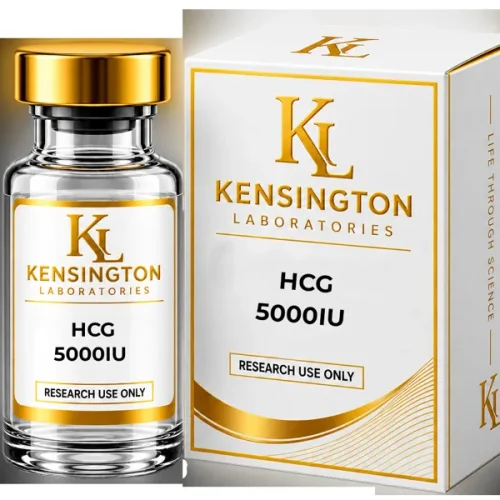 HCG Research Peptide
Original price was: €49.95.€44.95Current price is: €44.95.
View product →
HCG Research Peptide
Original price was: €49.95.€44.95Current price is: €44.95.
View product →
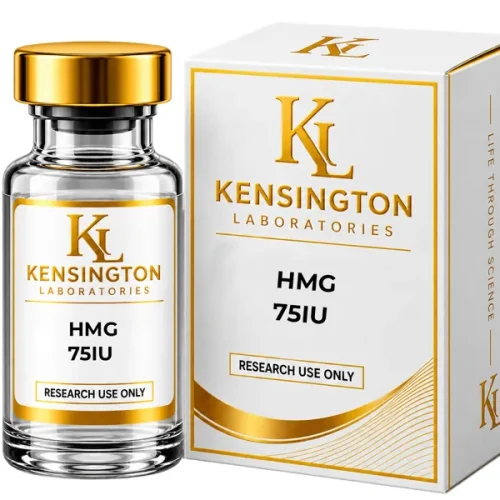 HMG Research Peptide
Original price was: €44.90.€39.90Current price is: €39.90.
View product →
HMG Research Peptide
Original price was: €44.90.€39.90Current price is: €39.90.
View product →
Also studied in this area
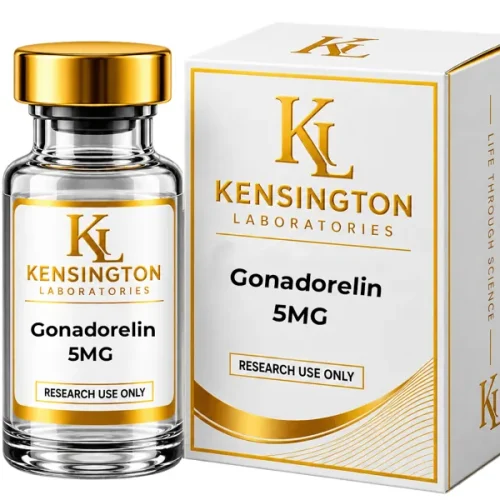 Gonadorelin Research Peptide
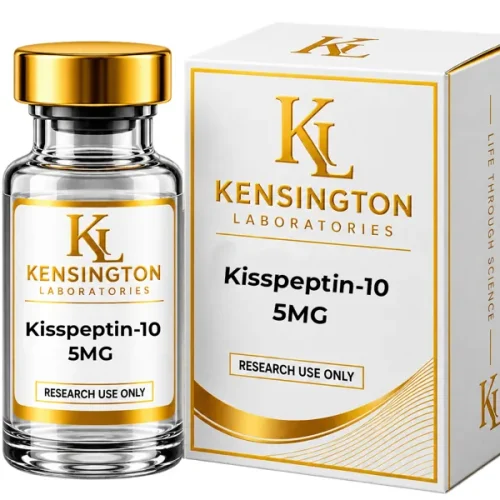 Kisspeptin-10 Research Peptide
Keep exploring
Related collections
Research overview
Pathways and research context
HCG mimics LH at the LH receptor, driving testosterone and progesterone production. HMG provides both FSH and LH activity for follicle development.
Gonadotropin signalling behind fertility research peptides Ireland
Fertility research peptides Ireland laboratories work with concentrate on the gonadotropins that drive gamete production. HCG mimics luteinising hormone at the LH receptor on Leydig and theca cells, triggering steroidogenic enzyme cascades that convert cholesterol into testosterone or progesterone. HMG supplies both FSH and LH activity, giving investigators a combined stimulus for follicular recruitment and granulosa cell function in reproductive endocrinology models.
Because these hormones act through G-protein-coupled receptors, downstream cAMP and PKA signalling are standard readouts. Researchers often pair hormone exposure with steroid assays to confirm receptor engagement, since a flat steroidogenic response can indicate degraded material rather than a true null result, underlining why HPLC tested gonadotropins matter for reproducible datasets.
Compound relationships across the HPG axis
HCG and HMG sit downstream of hypothalamic and pituitary control, so many protocols cross-reference Gonadorelin research peptide work and Kisspeptin-10 research to study the full hypothalamic-pituitary-gonadal axis. Kisspeptin-10 stimulates GnRH neurons via KISS1R, while Gonadorelin is synthetic GnRH acting directly on pituitary gonadotrophs, each sitting one or two steps above the gonadotropins themselves.
Comparing an upstream secretagogue against a direct gonadotropin lets a lab distinguish central versus gonadal effects in the same culture or animal model. This layered design is common in fertility research peptides Ireland programmes investigating where a candidate intervention actually acts within the axis.
Laboratory applications and model systems
Common applications include ovulation induction models in rodent and bovine systems, steroidogenesis assays in isolated Leydig or granulosa cells, and spermatogenesis research using testicular explants. HCG is frequently used as a positive control to confirm that a culture system or animal model is responsive before testing a novel compound against it.
HMG's dual FSH/LH activity makes it useful in follicle development timelines where investigators track antral follicle counts, oestradiol output, and granulosa proliferation markers over several days, giving a fuller picture than single-hormone exposure.
Study design considerations for gonadotropin protocols
Dose-response curves are essential because gonadotropin receptors desensitise under continuous high exposure, a phenomenon researchers must account for when designing multi-day protocols. Including a vehicle control and, where relevant, a GnRH antagonist arm helps separate direct gonadal effects from axis-level feedback.
Timing of sample collection relative to hormone administration affects steroid readouts substantially, so protocols should fix collection windows in advance and document them alongside batch identifiers from the certificate of analysis peptides supplied with each vial.
Handling, storage and quality for fertility research peptides Ireland supply
Lyophilised gonadotropin vials should be stored frozen before reconstitution and kept refrigerated once in solution, used within the short window recommended for peptide hormones to avoid aggregation. Reconstitution with bacteriostatic or sterile water should be done gently to avoid denaturing the protein structure of HCG and HMG.
Every batch supplied to fertility research peptides Ireland laboratories should carry LC-MS verified HCG identity data and an HPLC purity trace, giving researchers the documentation needed to reference material quality in methods sections and to compare lots across a multi-phase study.
Compound comparison
| Compound | Mechanism studied | Research focus |
|---|---|---|
| HCG | LH receptor agonist via cAMP/PKA signalling | Steroidogenesis and ovulation induction models |
| HMG | Combined FSH/LH receptor activity | Follicular development and granulosa cell research |
| Gonadorelin | Synthetic GnRH acting on pituitary gonadotrophs | Pulsatile LH/FSH release studies |
| Kisspeptin-10 | KISS1R agonist activating GnRH neurons | Upstream HPG axis signalling research |
Research considerations
Upstream regulators (Kisspeptin, Gonadorelin) are useful for studying the full HPG axis.
Knowledge Centre
Related articles
Questions
Frequently asked questions
What is the difference between HCG and HMG?
How do upstream peptides relate?
Why is HCG often used as a positive control in fertility assays?
How should HMG be reconstituted for laboratory use?
Does continuous HCG exposure behave the same as pulsatile exposure?
What documentation should accompany research-grade HMG shipments?
Quality
Certificates of analysis
Every compound in this collection is supplied with a batch-matched certificate of analysis confirming HPLC purity and LC-MS identity.
Categories
Related categories
Ready to source fertility research peptides?
HPLC-tested, lyophilised vials with batch COAs. Free tracked delivery over €50 · €9.90 under €50 (3–5 days)