
Products
Compounds in this collection
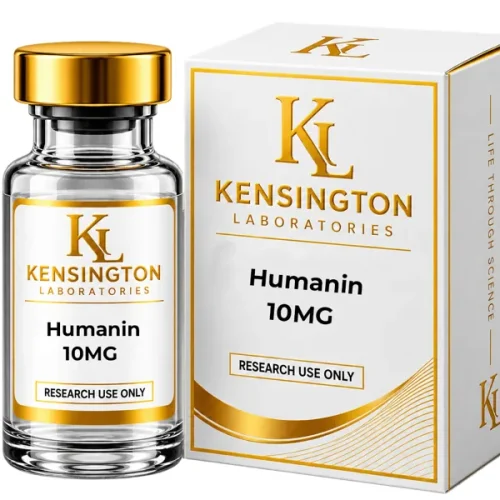 Humanin Research Peptide
Also studied in this area
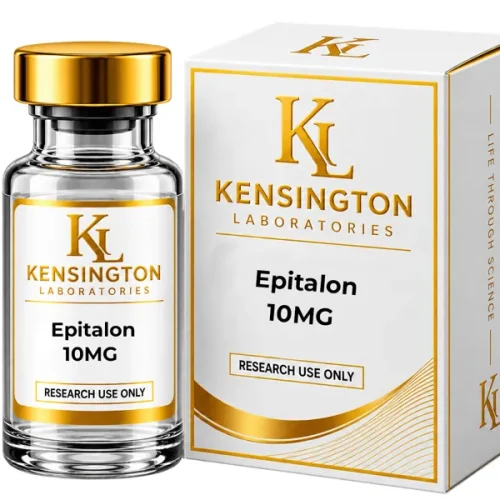 Epitalon Research Peptide
Price range: €29.90 through €89.90
View product →
Epitalon Research Peptide
Price range: €29.90 through €89.90
View product →
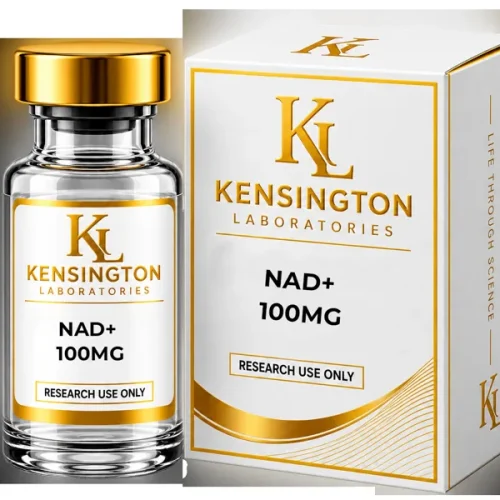 NAD+ Research Peptide
Price range: €79.90 through €124.90
View product →
NAD+ Research Peptide
Price range: €79.90 through €124.90
View product →
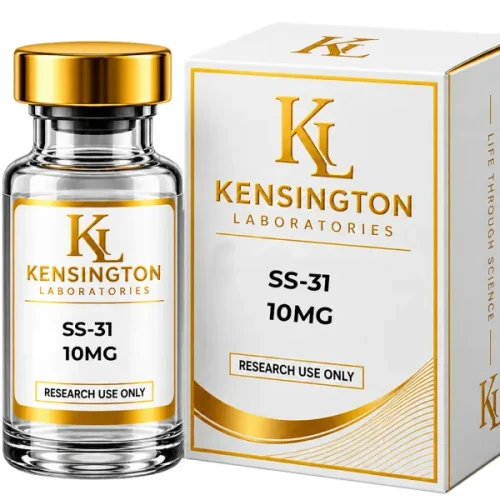 SS-31 Research Peptide
Price range: €34.95 through €114.90
View product →
SS-31 Research Peptide
Price range: €34.95 through €114.90
View product →
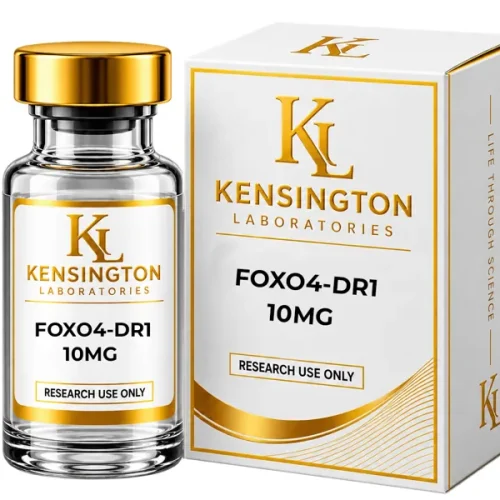 FOXO4-DRI Research Peptide
Original price was: €189.90.€169.90Current price is: €169.90.
View product →
FOXO4-DRI Research Peptide
Original price was: €189.90.€169.90Current price is: €169.90.
View product →
Keep exploring
Related collections
Research overview
Pathways and research context
Humanin is studied for its interaction with IGFBP-3, the FPRL1 receptor and STAT3 signalling, all linked to cell survival under stress. Related compounds extend the picture to telomerase activity, NAD+ availability and mitochondrial membrane stability.
Mechanisms studied under cellular longevity research peptides Ireland programmes
Humanin, the anchor compound of this collection, is a mitochondrial-derived peptide studied for its interaction with IGFBP-3, the FPRL1 receptor and downstream STAT3 signalling, all of which relate to how a cell survives metabolic or oxidative stress. These pathways sit at the centre of most cellular longevity research peptides Ireland laboratories currently investigate.
SS-31 is reviewed for binding cardiolipin in the inner mitochondrial membrane, a mechanism distinct from Humanin's receptor-based signalling, giving researchers two separate entry points into mitochondrial resilience research within the same experimental panel.
Compound relationships in longevity research
Epitalon is studied for telomerase-linked and pineal gland signalling, NAD+ for its role as a metabolic cofactor tied to sirtuin activity, and FOXO4-DR1 for disrupting the FOXO4-p53 interaction implicated in senescent cell survival. Each compound targets a separate node in the ageing-biology literature, so they are frequently run as comparative arms rather than substitutes for one another.
Because Humanin, SS-31 and NAD+ all intersect with mitochondrial function from different angles, protocols often position them as a mitochondrial sub-panel distinct from the telomere-focused Epitalon arm and the senescence-focused FOXO4-DR1 arm.
Laboratory applications and model systems
Cell survival and apoptosis assays under induced oxidative or metabolic stress are the most common setting for Humanin and SS-31 research, typically read out through viability staining or caspase activity. Senescence-associated beta-galactosidase assays are used alongside FOXO4-DR1 to assess selective clearance of senescent cells in culture.
NAD+ availability is commonly measured enzymatically or through fluorescent NAD+/NADH ratio assays in metabolic ageing models, often run in parallel with mitochondrial membrane potential readings to connect energy status with cell survival outcomes.
Study design considerations for longevity endpoints
Longevity-relevant endpoints, such as senescence burden or telomere-linked markers, typically require longer observation windows than acute signalling assays, so protocols often combine early biomarker readings with extended culture timepoints to track whether short-term effects persist.
Cross-referencing Epitalon, NAD+, SS-31 and FOXO4-DR1 against the Humanin baseline helps place a given result within the wider cellular ageing literature, since these compounds are rarely studied in total isolation from one another in published protocols.
Handling and quality for cellular longevity research peptides Ireland supply
All sequences in this collection are supplied lyophilised and require refrigerated, light-protected storage once reconstituted, with short working-solution windows recommended given their sensitivity in buffer. Reconstitution should be done with bacteriostatic water and planned around the specific assay's timing rather than prepared well in advance.
Kensington Labs issues an HPLC tested, LC-MS verified certificate of analysis for every batch, giving Irish research groups the documentation needed to support reproducible cellular longevity research peptides Ireland institutions can cite in their methods sections.
Compound comparison
| Compound | Mechanism studied | Research focus |
|---|---|---|
| Humanin — 10mg | Mitochondrial-derived peptide; IGFBP-3/FPRL1/STAT3-linked stress survival signalling. | |
| Epitalon — 10mg | Telomerase and pineal-signalling bioregulator, cross-linked from the bioregulator collection. | |
| NAD+ — 100mg | Metabolic cofactor studied for sirtuin-linked ageing pathways. | |
| SS-31 — 10mg | Cardiolipin-binding peptide studied for mitochondrial membrane stability. | |
| FOXO4-DRI — 10mg | Disrupts FOXO4-p53 interaction; studied in senescent cell clearance models. |
Research considerations
Longevity endpoints take time to measure, so protocols often combine short-term biomarkers with longer observation windows. Cross-referencing the Cellular hubs helps place results in context.
Knowledge Centre
Related articles
Questions
Frequently asked questions
What is a mitochondrial-derived peptide?
Which compounds are often studied alongside Humanin?
How does SS-31 differ mechanistically from Humanin?
Why pair NAD+ with FOXO4-DR1 in a longevity protocol?
What storage conditions apply after reconstitution?
Is a certificate of analysis provided for every batch?
Quality
Certificates of analysis
Every compound in this collection is supplied with a batch-matched certificate of analysis confirming HPLC purity and LC-MS identity.
Categories
Related categories
Ready to source cellular longevity research peptides?
HPLC-tested, lyophilised vials with batch COAs. Free tracked delivery over €50 · €9.90 under €50 (3–5 days)