
Products
Compounds in this collection
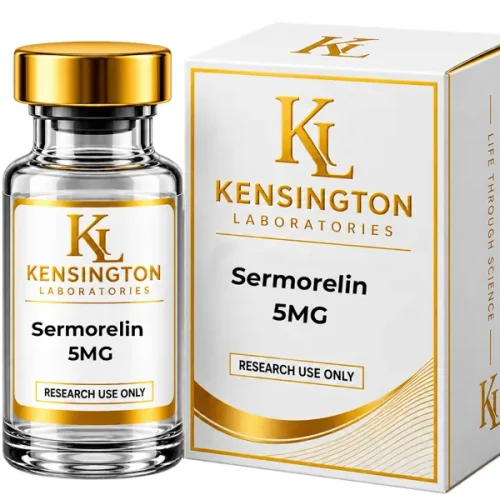 Sermorelin Research Peptide
Original price was: €44.90.€39.95Current price is: €39.95.
View product →
Sermorelin Research Peptide
Original price was: €44.90.€39.95Current price is: €39.95.
View product →
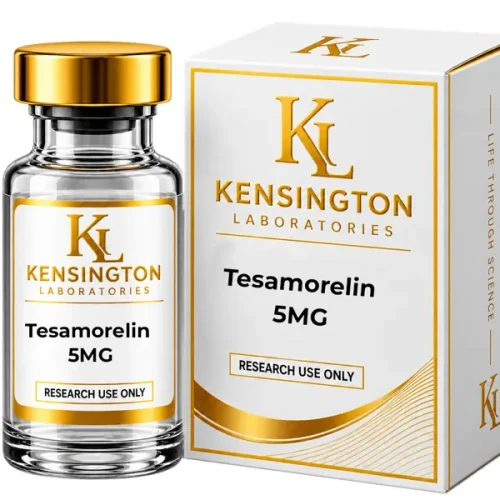 Tesamorelin Research Peptide
Price range: €79.90 through €124.90
View product →
Tesamorelin Research Peptide
Price range: €79.90 through €124.90
View product →
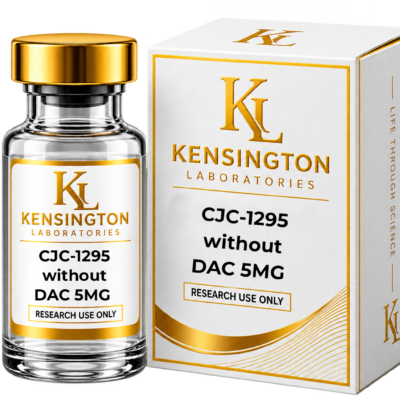 CJC-1295 without DAC Research Peptide
Price range: €39.95 through €49.90
View product →
CJC-1295 without DAC Research Peptide
Price range: €39.95 through €49.90
View product →
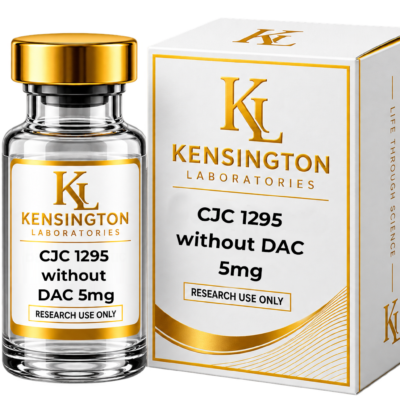 CJC-1295 with DAC Research Peptide
Original price was: €49.90.€44.90Current price is: €44.90.
View product →
CJC-1295 with DAC Research Peptide
Original price was: €49.90.€44.90Current price is: €44.90.
View product →
Also studied in this area
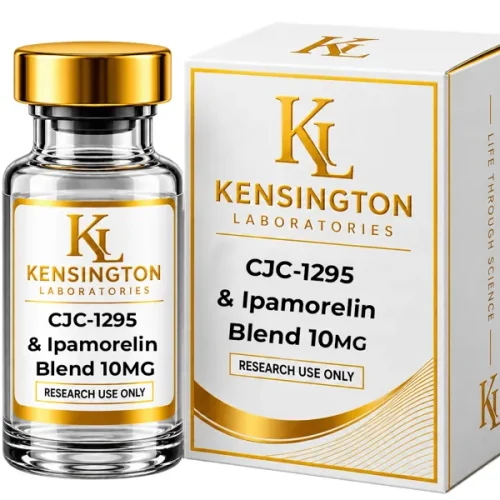 CJC-1295 (no DAC) & Ipamorelin Blend Research Peptide
Keep exploring
Related collections
Research overview
Pathways and research context
GHRH analogues bind the GHRH receptor on pituitary somatotrophs, increasing pulsatile GH release and downstream IGF-1. The DAC modification on CJC-1295 extends half-life through albumin binding.
How growth hormone peptides Ireland researchers choose GHRH analogues
GHRH analogues occupy a defined niche in pituitary research: rather than supplying exogenous growth hormone, they prompt the pituitary's own somatotroph cells to release it. This distinction matters for study design, since the resulting GH secretion remains pulsatile and subject to the negative feedback loops that natural GHRH exhibits, giving researchers a closer model of endogenous regulation.
Sermorelin, Tesamorelin and CJC-1295 all bind the same GHRH receptor but differ in stability and half-life, so a lab choosing among growth hormone peptides Ireland suppliers list will weigh which pharmacokinetic profile best fits a given protocol's sampling schedule and desired exposure window.
Compound relationships within the GHRH family
Sermorelin is a truncated 29-amino-acid fragment retaining full GHRH receptor activity but with a short half-life, making it useful for studying acute pulsatile release. Tesamorelin is a stabilised, full-length analogue most associated in the literature with visceral fat and IGF-1 axis research, giving a longer window of receptor engagement than Sermorelin.
CJC-1295 extends this family further: the base molecule shares Sermorelin's short action, while the DAC-modified version covalently associates with circulating albumin, extending detectable activity to several days. Researchers frequently pair CJC-1295 with Ipamorelin in blend formats to study combined GHRH/ghrelin receptor signalling.
Laboratory applications and model systems
GHRH analogues are used across in vitro pituitary cell cultures and in vivo rodent models examining pulsatile GH secretion, downstream IGF-1 production and metabolic endpoints such as lipolysis and lean mass. Tesamorelin in particular appears in visceral adiposity models referencing its distinct action on fat depots relative to other analogues.
Comparative protocols often run Sermorelin against CJC-1295 (with and without DAC) side by side to characterise differences in secretion profile shape — a single sharp GH pulse versus a sustained elevation — which has implications for interpreting downstream IGF-1 assay data.
Study design considerations for GHRH analogue research
Because GHRH analogues act on pulsatile systems, sampling frequency is a critical variable: infrequent timepoints can miss transient GH peaks following Sermorelin or standard CJC-1295 administration, while DAC-extended analogues demand longer observation windows to capture their flatter, prolonged profile.
Dose selection should also account for receptor desensitisation reported with repeated high-dose GHRH exposure in some models, and researchers should document reconstitution solvent and storage conditions alongside dosing records to keep results reproducible across replicate runs.
Handling, storage and quality assurance
Lyophilised GHRH analogues remain most stable refrigerated or frozen prior to reconstitution, and once reconstituted with bacteriostatic or sterile water should be kept refrigerated and used within the manufacturer's stated window to limit peptide degradation.
Every batch supplied for growth hormone peptides Ireland research should carry a certificate of analysis showing HPLC purity and LC-MS verified mass confirmation; Kensington Labs Ireland provides batch-specific COAs for Sermorelin, Tesamorelin and both CJC-1295 forms so research teams can confirm identity and purity before use.
Compound comparison
| Compound | Mechanism studied | Research focus |
|---|---|---|
| Sermorelin | Truncated GHRH(1-29) analogue binding the pituitary GHRH receptor | Acute pulsatile GH release studies |
| Tesamorelin | Stabilised full-length GHRH analogue with extended receptor engagement | Visceral fat and IGF-1 axis research |
| CJC-1295 | GHRH analogue acting briefly at the GHRH receptor | Short-window pulsatile GH studies |
| CJC-1295 DAC | Albumin-binding GHRH analogue with extended systemic half-life | Sustained GH/IGF-1 elevation research |
| CJC-1295/Ipamorelin blend | Combined GHRH and ghrelin receptor agonism | GHRH/ghrelin synergy and combined GH pulse research |
Research considerations
CJC-1295 with and without DAC give very different release profiles, so choose the form to match the study design.
Knowledge Centre
Related articles
Questions
Frequently asked questions
What is the difference between CJC-1295 with and without DAC?
How does Tesamorelin differ from Sermorelin?
Why do some GHRH analogues require reconstitution before use?
Does peptide purity affect GHRH receptor assay results?
Can GHRH analogues be studied without a growth hormone assay?
How is CJC-1295 DAC distinguished analytically from the non-DAC form?
Quality
Certificates of analysis
Every compound in this collection is supplied with a batch-matched certificate of analysis confirming HPLC purity and LC-MS identity.
Categories
Related categories
Ready to source growth hormone research peptides?
HPLC-tested, lyophilised vials with batch COAs. Free tracked delivery over €50 · €9.90 under €50 (3–5 days)