
Products
Compounds in this collection
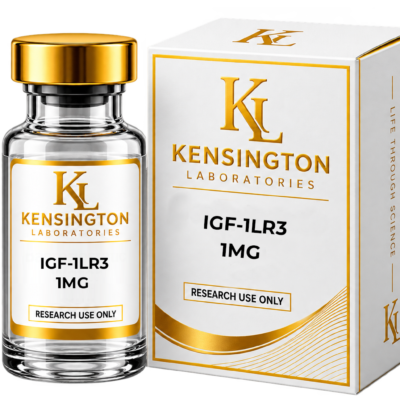 IGF-1 LR3 Research Peptide
Original price was: €49.90.€39.90Current price is: €39.90.
View product →
IGF-1 LR3 Research Peptide
Original price was: €49.90.€39.90Current price is: €39.90.
View product →
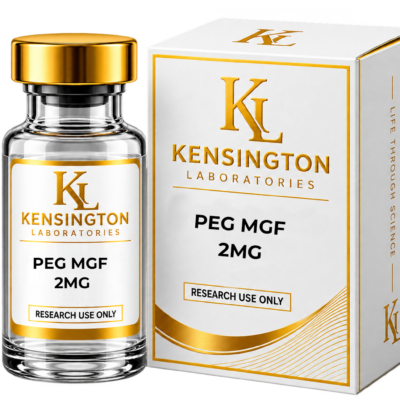 PEG-MGF Research Peptide
Original price was: €59.90.€34.90Current price is: €34.90.
View product →
PEG-MGF Research Peptide
Original price was: €59.90.€34.90Current price is: €34.90.
View product →
Also studied in this area
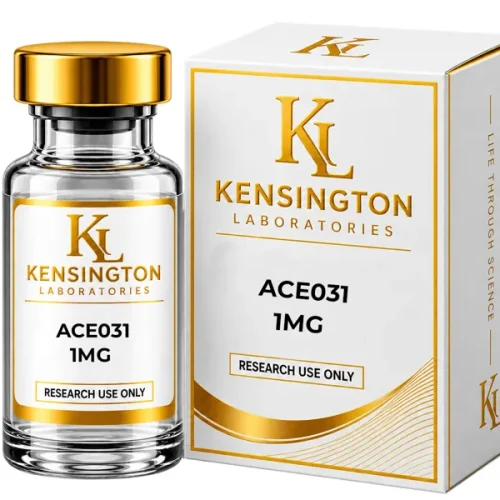 ACE-031 Research Peptide
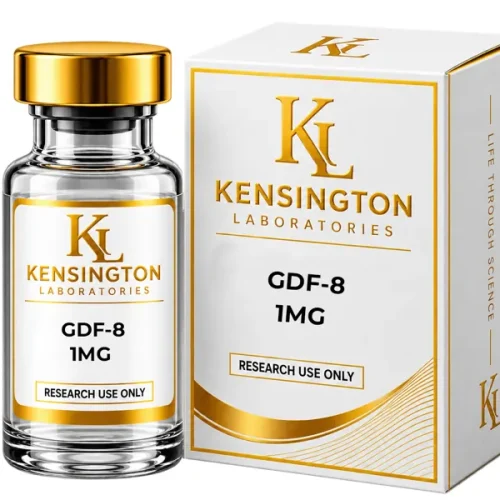 GDF-8 Research Peptide
Keep exploring
Related collections
Research overview
Pathways and research context
IGF-1 LR3 binds the IGF-1 receptor with reduced binding to IGF-binding proteins, giving a longer half-life. MGF is a splice variant released in response to mechanical load; PEGylation extends its activity.
What IGF research peptides Ireland laboratories study downstream of GH
IGF research peptides sit downstream of the growth hormone axis, acting directly on the IGF-1 receptor to influence muscle cell proliferation, differentiation and repair rather than triggering upstream GH release. IGF-1 LR3 and PEG-MGF are the two anchor compounds, each modified from a naturally occurring sequence to extend activity in research settings.
Teams sourcing IGF research peptides Ireland supply need to recognise that, unlike GHRH analogues or secretagogues, these compounds act directly at the cellular level, making them common endpoints in myoblast and tissue-repair assays rather than systemic hormone-pulse studies.
Relationship between IGF-1 LR3 and PEG-MGF
IGF-1 LR3 is a long-arginine-3 analogue of IGF-1 carrying an amino acid substitution and 13-residue N-terminal extension that markedly reduces its affinity for IGF-binding proteins, giving it a longer functional half-life than native IGF-1 in cell-based and in vivo models.
PEG-MGF is a PEGylated form of mechano growth factor, a splice variant of the IGF-1 gene naturally upregulated by mechanical loading of muscle tissue. PEGylation slows clearance, extending the window during which researchers can observe its effect on satellite cell activation compared with the unmodified splice variant.
Laboratory applications and body-composition crosslinks
Core applications include myoblast proliferation assays, muscle injury repair models and hypertrophy research tracking satellite cell activation following mechanical or chemical stimulus. IGF-1 LR3 is frequently used as a receptor-level comparator against upstream GHRH or secretagogue studies to separate systemic from local signalling effects.
Because IGF and myostatin pathways intersect in muscle growth regulation, IGF-1 LR3 and PEG-MGF are commonly studied alongside myostatin pathway compounds such as ACE-031 and GDF-8 to build a fuller picture of hypertrophy signalling in a given model.
Study design considerations for IGF pathway research
Because IGF-1 LR3's reduced IGF-binding-protein affinity changes its distribution relative to native IGF-1, researchers should account for this when comparing exposure across cell culture versus in vivo systems, and dosing intervals should reflect each analogue's distinct half-life.
When studying PEG-MGF, the local versus systemic delivery route matters: mechanical-load models studying endogenous MGF induction are not directly comparable to systemic PEG-MGF administration, so protocols should state clearly which exposure route is being modelled.
Handling, reconstitution and batch quality for IGF compounds
IGF-1 LR3 and PEG-MGF are supplied lyophilised and should be stored frozen until reconstitution, after which solutions are best kept refrigerated and used promptly, since IGF peptides can be comparatively sensitive to repeated freeze-thaw cycles.
As with every compound in the IGF research peptides Ireland range, Kensington Labs Ireland provides a batch-specific certificate of analysis confirming HPLC purity and LC-MS verified mass, supporting reproducible receptor-binding and proliferation assay results.
Compound comparison
| Compound | Mechanism studied | Research focus |
|---|---|---|
| IGF-1 LR3 | IGF-1 receptor agonist with reduced IGF-binding-protein affinity | Myoblast proliferation and extended IGF-1 receptor activity research |
| PEG-MGF | PEGylated mechano growth factor splice variant | Muscle repair and satellite cell activation research |
| ACE-031 | Soluble activin receptor binding myostatin | Myostatin pathway and muscle mass research |
| GDF-8 | Myostatin, reference ligand for activin receptor signalling | Myostatin pathway reference studies |
Research considerations
IGF compounds are commonly studied with myostatin pathway compounds from the Body Composition hub.
Knowledge Centre
Related articles
Questions
Frequently asked questions
What does LR3 mean in IGF-1 LR3?
What is PEG-MGF?
Why is IGF-1 LR3 preferred over native IGF-1 in some models?
Does PEG-MGF behave the same as naturally induced MGF?
Are IGF-1 LR3 and PEG-MGF usually studied together?
How many freeze-thaw cycles can an IGF-1 LR3 solution withstand?
Quality
Certificates of analysis
Every compound in this collection is supplied with a batch-matched certificate of analysis confirming HPLC purity and LC-MS identity.
Categories
Related categories
Ready to source igf research peptides?
HPLC-tested, lyophilised vials with batch COAs. Free tracked delivery over €50 · €9.90 under €50 (3–5 days)