
Products
Compounds in this collection
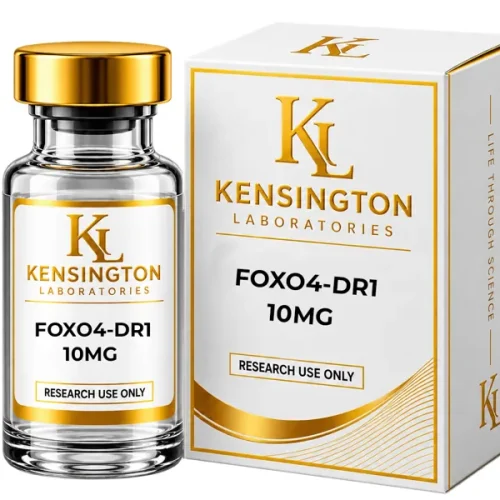 FOXO4-DRI Research Peptide
Also studied in this area
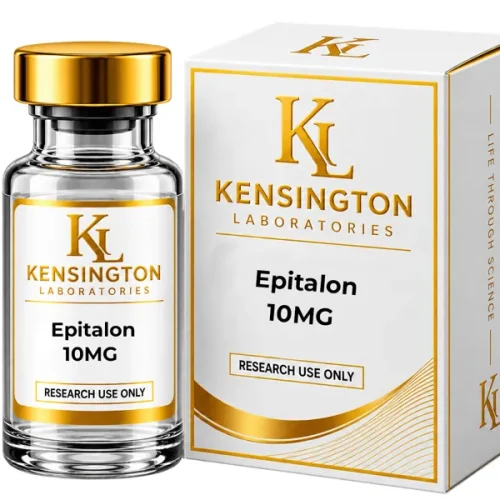 Epitalon Research Peptide
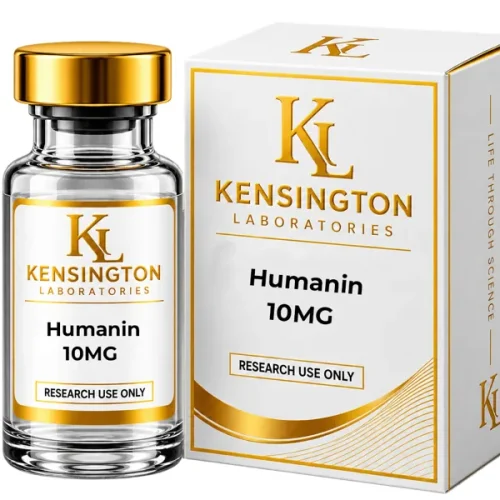 Humanin Research Peptide
Keep exploring
Related collections
Research overview
Pathways and research context
FOXO4-DR1 is designed to disrupt the interaction between FOXO4 and p53 in senescent cells, releasing p53 to trigger apoptosis selectively.
Cellular senescence pathways studied with senescence research peptides Ireland
Senescence research peptides Ireland laboratories investigate focus on cells that stop dividing but resist normal programmed cell death. FOXO4-DR1 is a designed peptide studied for disrupting the protein-protein interaction between FOXO4 and p53 within senescent cells, a binding event that normally sequesters p53 and allows senescent cells to persist.
By interfering with this interaction, FOXO4-DR1 is studied for releasing p53 to the mitochondria, where it is proposed to trigger intrinsic apoptosis selectively in senescent cells while sparing healthy, proliferating cells in the same tissue environment.
Compound relationships with telomere and mitochondrial longevity research
Senescence research is frequently studied alongside Epitalon research peptide work, since telomere attrition is one recognised trigger of cellular senescence, giving researchers a mechanistic link between telomerase-related ageing research and senolytic intervention studies.
Humanin peptide Ireland researchers use is also cross-linked here, since mitochondrial dysfunction contributes to senescence onset, and Humanin's cell-survival signalling offers a contrasting comparator: where FOXO4-DR1 is studied for removing senescent cells, Humanin is studied for protecting cells from entering stress-induced death pathways in the first place.
Laboratory applications for senolytic and ageing tissue research
Core applications include senolytic assays in cultured fibroblasts induced into senescence via replicative exhaustion, irradiation or oncogene activation, followed by FOXO4-DR1 exposure and viability assessment to quantify selective clearance of senescent populations.
Ageing tissue models in rodents are also used to examine whether senolytic treatment improves tissue-level markers of function, with p53 signalling research run in parallel to confirm the proposed mechanism of action at the molecular level.
Study design considerations for senescence assays
Confirming senescence induction before and after treatment is essential, typically via SA-β-gal staining and p16INK4a expression, since without these markers it is difficult to distinguish genuine senolytic clearance from general cytotoxicity affecting all cell types.
Dose-response and time-course data are particularly important for FOXO4-DR1, as selectivity for senescent over healthy cells can narrow at higher concentrations, meaning a well-characterised therapeutic-research window should be established for each cell type studied.
Handling, storage and quality for senescence peptide supply
FOXO4-DR1 and related senescence-pathway peptides should be stored as lyophilised powder at freezer temperature and reconstituted shortly before use, since peptide-peptide interaction-disrupting sequences can lose structural integrity with extended time in solution.
Senescence research peptides Ireland suppliers should provide a certificate of analysis with HPLC purity and LC-MS verified FOXO4-DR1 identity for every batch, giving laboratories the documentation needed to support research grade senolytic peptide claims in published methodology.
Compound comparison
| Compound | Mechanism studied | Research focus |
|---|---|---|
| FOXO4-DR1 | Disrupts FOXO4/p53 interaction, releasing p53 for apoptosis | Senolytic clearance of senescent cells |
| Epitalon | Linked to telomerase activity and pineal signalling | Telomere attrition and ageing research |
| Humanin | Mitochondrial-derived peptide supporting cell survival | Stress resistance and apoptosis-protection research |
Research considerations
Confirm senescence markers (SA-β-gal, p16) before and after treatment.
Knowledge Centre
Related articles
Questions
Frequently asked questions
What is a senolytic?
How does FOXO4-DR1 work in models?
How is senescence confirmed before testing a senolytic peptide?
Why might FOXO4-DR1 selectivity narrow at higher concentrations?
What is the mechanistic link between telomere research and senescence research?
How does Humanin's role differ from FOXO4-DR1's role in senescence models?
Quality
Certificates of analysis
Every compound in this collection is supplied with a batch-matched certificate of analysis confirming HPLC purity and LC-MS identity.
Categories
Related categories
Ready to source senescence research peptides?
HPLC-tested, lyophilised vials with batch COAs. Free tracked delivery over €50 · €9.90 under €50 (3–5 days)