
Products
Compounds in this collection
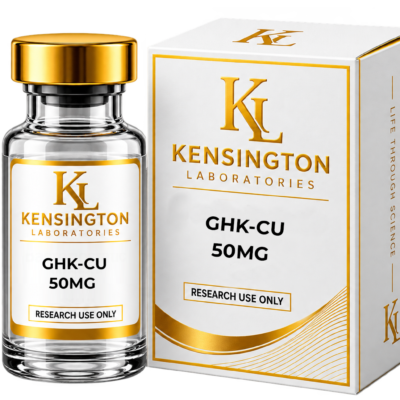 GHK-Cu Research Peptide
Price range: €34.95 through €44.95
View product →
GHK-Cu Research Peptide
Price range: €34.95 through €44.95
View product →
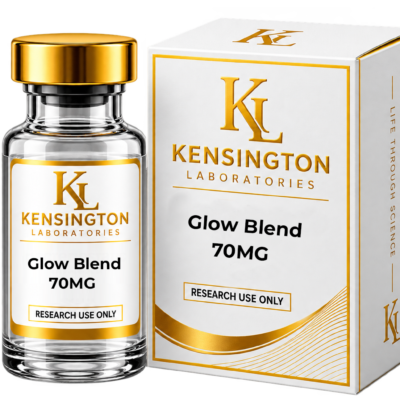 Glow Blend Research Peptide
Original price was: €139.90.€119.90Current price is: €119.90.
View product →
Glow Blend Research Peptide
Original price was: €139.90.€119.90Current price is: €119.90.
View product →
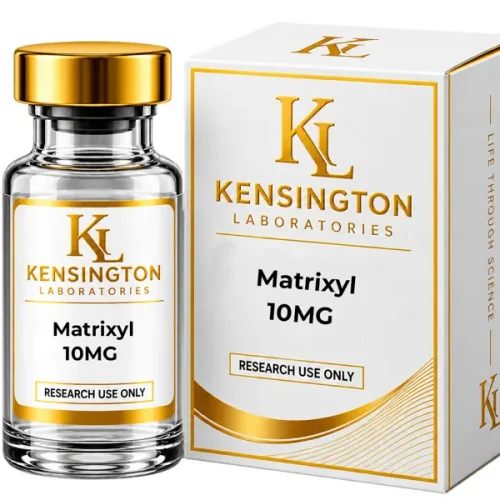 Matrixyl Research Peptide
Original price was: €39.90.€24.90Current price is: €24.90.
View product →
Matrixyl Research Peptide
Original price was: €39.90.€24.90Current price is: €24.90.
View product →
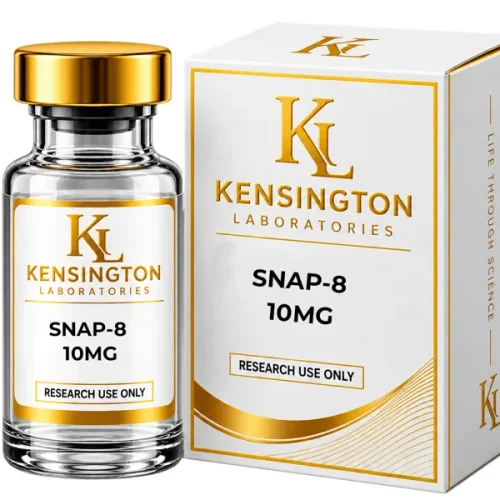 SNAP-8 Research Peptide
Original price was: €39.95.€29.95Current price is: €29.95.
View product →
SNAP-8 Research Peptide
Original price was: €39.95.€29.95Current price is: €29.95.
View product →
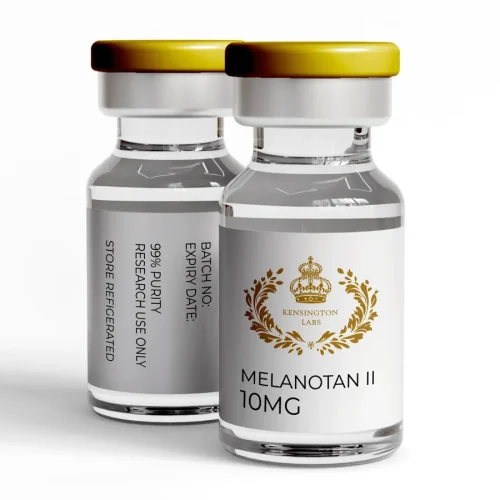 Melanotan II Research Peptide
Original price was: €49.90.€44.90Current price is: €44.90.
View product →
Melanotan II Research Peptide
Original price was: €49.90.€44.90Current price is: €44.90.
View product →
Also studied in this area
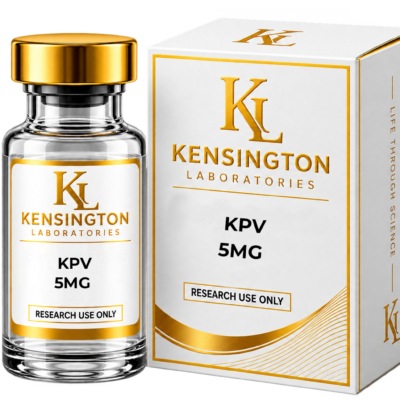 KPV Research Peptide
Keep exploring
Related collections
Research overview
Pathways and research context
GHK-Cu is studied for copper delivery and gene-expression effects on collagen, elastin and glycosaminoglycans. Matrixyl acts as a matrikine signal, SNAP-8 targets the SNARE complex, and Melanotan II engages melanocortin receptors linked to pigmentation.
Mechanisms behind skin and matrix research peptides Ireland laboratories use
GHK-Cu, the reference compound across skin and matrix research peptides Ireland suppliers list, is a naturally occurring copper-binding tripeptide studied for gene-expression effects on collagen, elastin and glycosaminoglycan synthesis in fibroblast cultures. Its copper-delivery function is considered central to the signalling attributed to it in the matrix-remodelling literature.
Matrixyl acts as a matrikine, a fragment that mimics collagen breakdown products to signal ongoing matrix repair, while SNAP-8 is studied for targeting the SNARE complex involved in neurotransmitter-vesicle fusion, giving the collection a second mechanistic branch alongside pure collagen signalling.
Compound relationships across the matrix panel
Melanotan II sits apart mechanistically from the collagen-focused compounds, engaging melanocortin receptors linked to pigmentation rather than matrix turnover, so it is typically run as an independent arm rather than compared head-to-head with GHK-Cu. The Glow Blend combines several of these compounds into a single formulation for labs studying combined skin-focused effects without separately handling each vial.
KPV, cross-linked from the tissue repair collection, is occasionally included in skin models for its anti-inflammatory signalling, giving researchers a way to separate matrix remodelling from inflammatory resolution within the same cell system.
Laboratory applications and model systems
Fibroblast collagen synthesis assays, typically read out via hydroxyproline content or collagen-specific staining, are the dominant application for GHK-Cu and Matrixyl research. Matrix remodelling studies also track matrix metalloproteinase activity to assess the balance between synthesis and breakdown.
Melanotan II is studied in melanogenesis models measuring melanin content or tyrosinase activity in melanocyte culture, while SNAP-8 is examined in models of neuromuscular signalling at the skin-muscle interface relevant to expression-line research.
Study design considerations for skin and matrix protocols
Topical and in-vitro formats dominate this field, so concentration, vehicle composition and copper-complex stability are the main variables researchers need to control for reproducible results. Because GHK-Cu's activity is copper-dependent, the integrity of the copper complex should be verified rather than assumed stable across a study's duration.
When combining GHK-Cu with Matrixyl or SNAP-8 in a single protocol, separate control arms for each compound help attribute observed collagen or pigmentation changes to the correct mechanism rather than an additive, unexplained effect.
Handling, purity and Ireland supply for matrix research
GHK-Cu and its collection-mates are supplied lyophilised and should be reconstituted shortly before use, stored refrigerated thereafter and protected from prolonged light exposure given the sensitivity of the copper complex. High purity GHK-Cu batches are particularly important here, since trace contaminants can interfere with copper-binding assays.
Kensington Labs supplies an HPLC tested, LC-MS verified certificate of analysis for every skin and matrix research peptides Ireland order, allowing research groups to confirm batch purity before starting fibroblast or melanocyte culture work.
Compound comparison
| Compound | Mechanism studied | Research focus |
|---|---|---|
| GHK-Cu — 50mg | Copper-binding tripeptide; reference compound for collagen and matrix signalling. | |
| Glow Blend — 70mg | Combined formulation for studying multiple skin-focused peptides together. | |
| Matrixyl — 10mg | Matrikine signal peptide mimicking collagen breakdown fragments. | |
| SNAP-8 — 10mg | Targets the SNARE complex; studied in neuromuscular-signalling models. | |
| Melanotan II — 10mg | Melanocortin receptor agonist studied in pigmentation/melanogenesis models. | |
| KPV — 5mg | Cross-linked anti-inflammatory tripeptide from the tissue repair collection. |
Research considerations
Topical and in-vitro models dominate this field. Concentration, formulation and copper-complex stability are common variables to control.
Knowledge Centre
Related articles
Questions
Frequently asked questions
Why is GHK-Cu supplied as a copper complex?
Is Matrixyl the same as GHK-Cu?
Why is Melanotan II grouped with matrix peptides if it targets pigmentation?
Does the Glow Blend replace the need for individual compound vials?
How should GHK-Cu solutions be protected during storage?
What assay is typically used to measure Matrixyl's effect on collagen?
Quality
Certificates of analysis
Every compound in this collection is supplied with a batch-matched certificate of analysis confirming HPLC purity and LC-MS identity.
Categories
Related categories
Ready to source skin & matrix research peptides?
HPLC-tested, lyophilised vials with batch COAs. Free tracked delivery over €50 · €9.90 under €50 (3–5 days)