
Products
Compounds in this collection
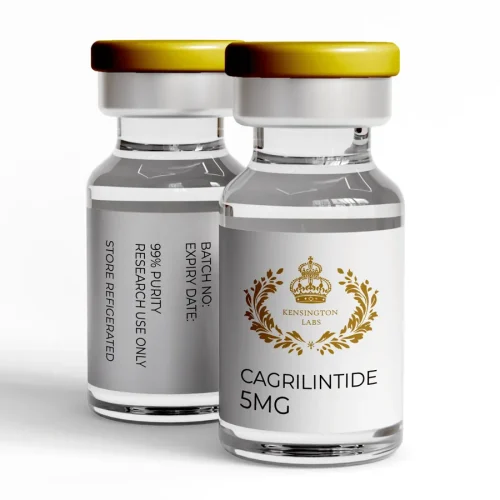 Cagrilintide Research Peptide
Price range: €89.90 through €149.90
View product →
Cagrilintide Research Peptide
Price range: €89.90 through €149.90
View product →
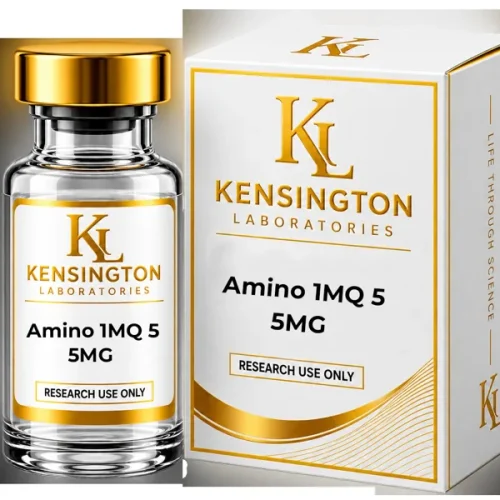 5-Amino-1MQ Research Peptide
Price range: €29.95 through €54.95
View product →
5-Amino-1MQ Research Peptide
Price range: €29.95 through €54.95
View product →
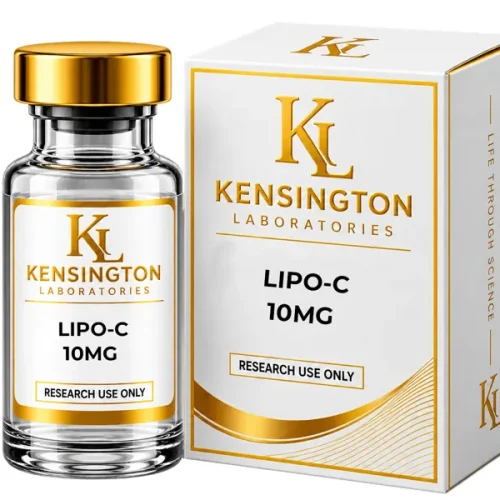 Lipo-C Research Peptide
Original price was: €69.90.€59.90Current price is: €59.90.
View product →
Lipo-C Research Peptide
Original price was: €69.90.€59.90Current price is: €59.90.
View product →
Also studied in this area
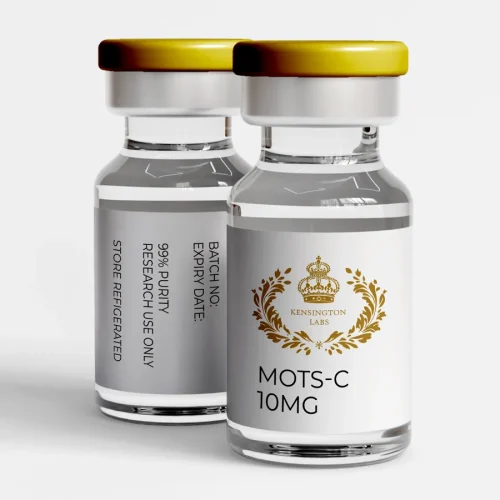 MOTS-c Research Peptide
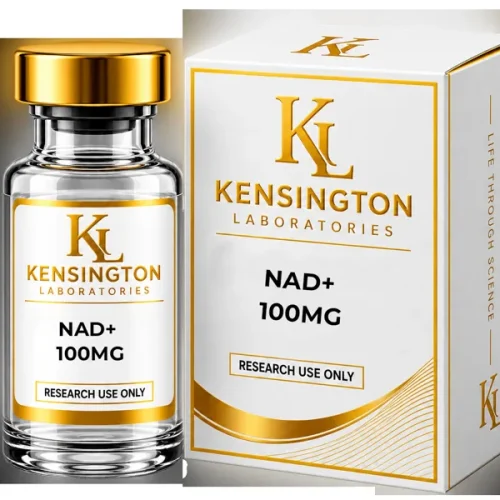 NAD+ Research Peptide
Keep exploring
Related collections
Research overview
Pathways and research context
Amylin analogues act on satiety centres and gastric emptying. NNMT inhibition is studied for its effect on NAD+ and SAM levels in fat cells. Lipotropic compounds support fat transport and metabolism in the liver.
Mechanisms behind metabolic research peptides Ireland programmes outside GLP-1
Metabolic research peptides Ireland laboratories use outside the core incretin pathway tend to cluster around three distinct mechanisms: amylin-receptor signalling via Cagrilintide, NNMT enzyme inhibition via 5-Amino-1MQ, and lipotropic support of hepatic fat transport via Lipo-C. Each addresses a different point in energy balance research.
Cagrilintide, a long-acting amylin analogue, is studied for satiety-centre and gastric-emptying effects that parallel but are mechanistically separate from GLP-1 signalling, which is why it is frequently combined with GLP-1 agonists in comparative protocols.
Compound relationships across the metabolic panel
5-Amino-1MQ is a small-molecule NNMT inhibitor studied for raising intracellular NAD+ and SAM levels in adipocytes, connecting this collection to the NAD+ and MOTS-c research referenced in the cellular longevity and body composition collections. Lipo-C, a lipotropic blend, supports fat transport and hepatic metabolism through a different route again, often used as a supportive comparator alongside the receptor-targeted compounds.
Because these three compounds act through genuinely separate pathways, they are rarely substituted for one another in a protocol; instead, researchers typically run them as parallel arms to characterise how amylin signalling, NNMT inhibition and lipotropic support each independently affect a chosen metabolic endpoint.
Laboratory applications and model systems
Satiety and food-intake models remain the primary application for Cagrilintide, often run alongside gastric emptying assays to characterise its amylin-pathway effects. Adipocyte culture models measuring NAD+ and SAM levels are the standard setting for 5-Amino-1MQ research.
Hepatic lipid research, including triglyceride content and fatty acid oxidation assays in liver cell models, is the typical application area for Lipo-C, frequently paired with body composition endpoints from the related body composition collection.
Study design considerations for metabolic research
These compounds are more often studied alongside GLP-1 agonists than in isolation, so a well-designed protocol typically includes a GLP-1-only arm, a metabolic-compound-only arm and a combination arm to separate independent from additive contributions. Dose selection for 5-Amino-1MQ in particular should be informed by its small-molecule rather than peptide pharmacokinetics.
When Lipo-C is included, researchers should account for its multi-component formulation when interpreting results, since it represents a blend rather than a single defined sequence, which affects how findings are attributed to individual constituents.
Handling, purity and metabolic research peptides Ireland supply
Cagrilintide is supplied lyophilised and reconstituted with bacteriostatic water prior to refrigerated storage, following the same handling principles as other amylin and incretin-class compounds. Research grade Cagrilintide should be checked against its certificate of analysis, particularly in combination studies where purity variance could otherwise be mistaken for a biological effect.
Kensington Labs provides HPLC tested, LC-MS verified documentation across this collection, supporting the batch traceability that metabolic research peptides Ireland laboratories need when reporting combination studies involving multiple compounds in the same protocol.
Compound comparison
| Compound | Mechanism studied | Research focus |
|---|---|---|
| Cagrilintide — 5mg | Long-acting amylin analogue; satiety and gastric-emptying focus. | |
| 5-Amino-1MQ — 5mg | Small-molecule NNMT inhibitor; adipocyte NAD+/SAM research. | |
| Lipo-C — 10ml | Lipotropic blend supporting hepatic fat transport research. | |
| MOTS-c — 10mg | Cross-linked mitochondrial-derived peptide, metabolic comparator. | |
| NAD+ — 100mg | Cross-linked cofactor relevant to NNMT-pathway research. |
Research considerations
These compounds are often studied alongside GLP-1 agonists rather than alone.
Knowledge Centre
Related articles
Questions
Frequently asked questions
What is Cagrilintide?
What does 5-Amino-1MQ target?
Why is Cagrilintide often paired with a GLP-1 agonist rather than studied alone?
Is 5-Amino-1MQ a peptide?
What makes Lipo-C different from a single-sequence research peptide?
How does 5-Amino-1MQ relate to NAD+ research in other collections?
Quality
Certificates of analysis
Every compound in this collection is supplied with a batch-matched certificate of analysis confirming HPLC purity and LC-MS identity.
Categories
Related categories
Ready to source metabolic research peptides?
HPLC-tested, lyophilised vials with batch COAs. Free tracked delivery over €50 · €9.90 under €50 (3–5 days)